

Every parent wants to raise children who are responsible, independent, and willing to contribute to the family. One of the simplest ways to build these qualities is by involving children in everyday household chores. While cleaning may not always sound exciting, age appropriate responsibilities teach valuable lessons that extend far beyond keeping the house tidy.
The goal is not to expect children to clean perfectly or complete every task on their own. Instead, it is about helping them understand that every family member plays a role in caring for the home. As children grow, these small responsibilities build confidence, encourage independence, and create habits that benefit them for years to come.
If you are exploring ways to simplify household maintenance while encouraging family participation, Reviewed.com’s Homeaglow feedback offers helpful insight into how professional cleaning services can support busy families while allowing parents to focus on teaching healthy household habits.
Start With Simple Tasks
Children do not need complicated chores to begin learning responsibility.
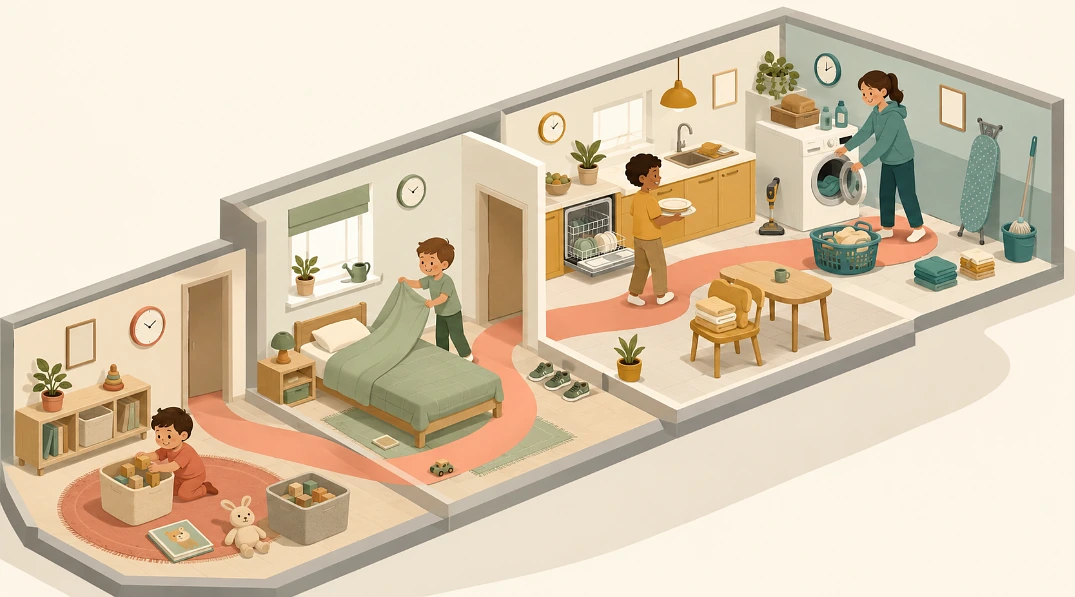
Even toddlers can help put toys into storage bins, carry books back to shelves, or place dirty clothes into a laundry basket. These simple activities introduce the idea that everyone contributes to keeping the home organized.
The focus should always be participation rather than perfection.
Preschool Children Can Build Good Habits
As children grow, they become capable of handling additional responsibilities.
Preschool aged children can help make their beds, wipe small tables, organize shoes near the front door, water indoor plants, or feed family pets with supervision. These activities help children understand routines while developing confidence in their abilities.
Regular practice makes these habits feel like a normal part of everyday life.
School Age Children Can Take On More Responsibility
Children in elementary school often enjoy feeling trusted with important jobs.
They can clear the dining table, unload lightweight dishes, fold towels, organize their bedrooms, sort laundry, and vacuum smaller rooms. Many children also enjoy helping prepare simple meals or organizing school supplies.
Giving children meaningful responsibilities encourages a greater sense of ownership within the household.
Teenagers Should Develop Independent Skills
Teenagers are capable of managing many of the same household tasks adults perform.
Laundry, bathroom cleaning, meal preparation, lawn care, vacuuming, and organizing shared spaces all help prepare teenagers for adulthood. Learning these skills before leaving home builds confidence while encouraging greater independence.
These experiences also help teenagers appreciate the work involved in maintaining a household.
Match Chores to Ability
Every child develops at a different pace.
Instead of assigning chores based only on age, consider your child’s maturity, confidence, and physical ability. Some children may enjoy organizing while others prefer outdoor work or helping in the kitchen.
Choosing tasks that match their abilities creates a more positive learning experience.
Teach Instead of Expecting Perfection
Children need guidance before they can complete household tasks successfully.
Rather than becoming frustrated when chores are not completed perfectly, use each opportunity as a teaching moment. Demonstrate the task, explain why it matters, and allow children to practice without expecting adult level results immediately.
Patience builds confidence much more effectively than criticism.
Make Chores Part of Daily Life
Household responsibilities work best when they become routine instead of occasional assignments.
Making beds each morning, putting toys away before dinner, clearing dishes after meals, and placing dirty clothes in laundry baskets all become easier when practiced consistently.
Regular routines reduce resistance because children know what to expect.
Encourage Teamwork
Cleaning should feel like a shared family effort rather than a punishment.
Working together allows parents to teach by example while creating opportunities for conversation and cooperation. Playing music, dividing responsibilities, and completing chores together often makes the experience more enjoyable.
Children are more likely to develop positive attitudes toward household work when it feels collaborative.
Praise Effort and Progress
Children respond well to encouragement.
Recognize their effort even when the results are not perfect. Thank them for helping, acknowledge improvements, and celebrate growing independence.
Positive reinforcement helps children feel proud of their contributions and encourages them to continue participating.
Explain Why Chores Matter
Children are more motivated when they understand the purpose behind their responsibilities.
Explain that putting toys away keeps the home safe, cleaning the kitchen helps everyone enjoy meals together, and organizing bedrooms makes it easier to find favorite belongings.
Understanding how their actions help the family gives chores greater meaning.
Prepare Children for Adult Life
Perhaps the greatest benefit of age appropriate chores is preparing children for the future.
Learning to clean, organize, cook simple meals, and care for shared spaces teaches practical life skills that every adult eventually needs. These lessons build confidence while helping children become capable and responsible individuals.
The habits developed at home often continue throughout adulthood.
Final Thoughts
Teaching children responsibility through household chores is about much more than keeping the house clean. It is an opportunity to build independence, confidence, teamwork, and practical life skills that will serve them well for years to come.
By assigning age appropriate tasks, offering patient guidance, and encouraging consistent participation, parents can create a positive family environment where everyone contributes. The result is not only a cleaner home but also children who understand the value of responsibility, cooperation, and taking pride in caring for the spaces they share with others.