

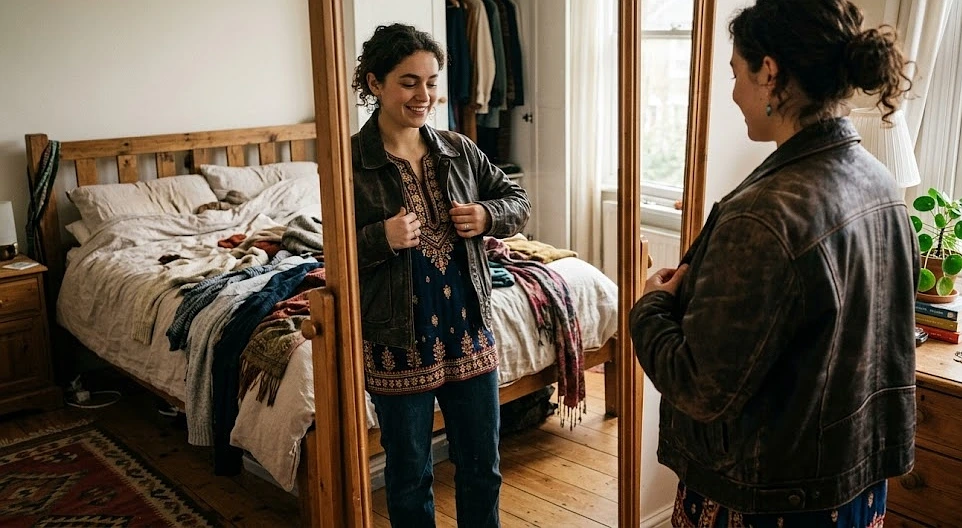
Most fashion has a version of you they’re trying to sell back to you. Taller, smoother, dressed in things that cost more than your rent. You flip through the pages and somewhere between the third perfume ad and the fourth white model in a beige trench coat, you close it and forget it existed.
Tiimatuvat came out of exactly that frustration.
It’s a fashion and lifestyle, yes. But the premise is different. The reader isn’t an aspiration — they’re the point. Their wardrobe, their culture, their budget, their mirror. That’s where the content starts.
Fashion is something you already own
There’s a specific kind of styling advice that’s technically correct and completely useless. “Layer a blazer over your basics for an elevated look.” Sure. But which blazer, bought where, worn with what, for which version of your life?
Tiimatuvat doesn’t do that. The styling coverage is built around what people actually have and what they can actually spend. One piece worn four ways. Thrifted finds that work alongside newer items. Building a wardrobe with intention instead of impulse.
That’s not a budget-fashion gimmick. That’s just how most people dress when nobody’s performing for an editorial shoot.
The Eastern-Western thing isn’t a trend here
A lot of publications have “discovered” cultural fusion fashion in the last few years. Suddenly, a kurta paired with straight-leg jeans is editorial. A headscarf styled with a leather jacket is a “bold choice.”
For plenty of readers, that’s just Tuesday.
Tiimatuvat covers Eastern and Western fashion together because its readers already live that way. Someone who grew up wearing shalwar kameez at home and jeans everywhere else didn’t need a Tiimatuvat to tell them that mix is valid — they’ve been doing it their whole life. What they needed was coverage that didn’t treat it like a novelty.
That’s a real difference. And readers notice it.
What the lifestyle side covers
| Topic | What it looks like |
|---|---|
| Confidence | Real conversations, not motivational filler |
| Personal style | Finding yours, not copying someone else’s |
| Self-care | Practical, across different skin types and budgets |
| Sustainable choices | Buying less, wearing more, keeping longer |
| Identity | How culture, background, and style connect |
None of these gets wrapped in the usual “love yourself” packaging that means nothing by the third time you read it. The writing is direct. The stories come from actual people.
The people in it look like people
Fashion media has a diversity problem that mostly gets addressed by swapping one narrow beauty standard for a slightly wider one and calling it progress.
Tiimatuvat’s approach is different in a specific way — the people featured aren’t there to represent a category. They’re there because they have a point of view on how they dress and why. That’s the editorial filter. Not their follower count, not their body type, not whether their aesthetic is currently trending on any particular platform.
You can tell the difference immediately when you read it.
Why does any of this matter
Getting dressed is one of the most ordinary things a person does. It’s also one of the most personal. What you put on in the morning is a small decision that adds up over time into something that says a lot about how you see yourself.
A Tiimatuvat that understands that — really understands it, not as a tagline but as an actual editorial position — is rarer than it should be.
Tiimatuvat is that. Sharp, honest, and built for people who were tired of waiting for fashion media to catch up with their actual lives.