

Let’s say we are talkng about San Antonio, Texas or Los Angeles or any other US based saloon spot.
Opening a salon is already expensive enough without discovering six months in that your shampoo bowls drain at a crawl or your water heater can’t keep up past the third client. Plumbing is one of those things salon owners almost always underthink during a build — until it becomes a very costly problem.
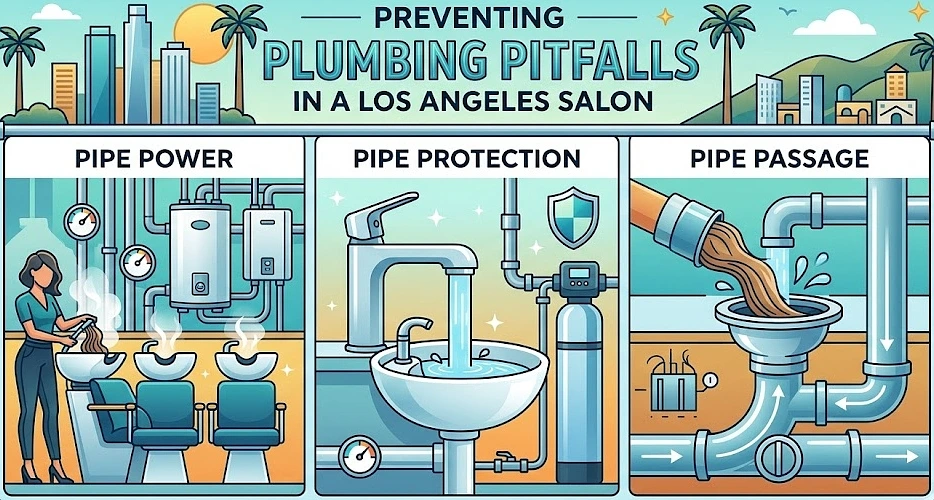
These three mistakes show up constantly in salon builds. Skip them early, and you’ll save yourself a headache that no amount of good reviews can fix.
1. Not Accounting for Water Demand Across All Stations
A residential water heater is built for a household. A busy salon is not a household. If you’re fitting out four shampoo bowls, a color bar, and a backbar with a utility sink, all running simultaneously during peak hours, a standard 40-gallon unit will tap out fast.

The fix isn’t always a bigger tank, either. Many salons have switched to tankless water heaters — they heat on demand and don’t store water, which matters in a city where space in a commercial lease is tight. But the bigger point is this: before a single pipe gets laid, your san antonio plumber needs to calculate the actual demand load for your specific station count, not just eyeball it.
Getting this wrong means cold rinses for your clients mid-appointment. That’s a one-star review waiting to happen.
2. Ignoring San Antonio Hard Water When Choosing Fixtures
Water is notoriously hard in Texas. The calcium and magnesium content is high enough that, without proper planning, your shampoo bowl faucets, spray nozzles, and pipe interiors will start showing scale buildup within a year. That buildup restricts water pressure, damages appliances, and eventually forces early replacements on equipment you just paid for.
This isn’t a minor cosmetic issue. A shampoo bowl with weak pressure is a functional problem — stylists can’t rinse color properly, which creates client complaints and product waste.
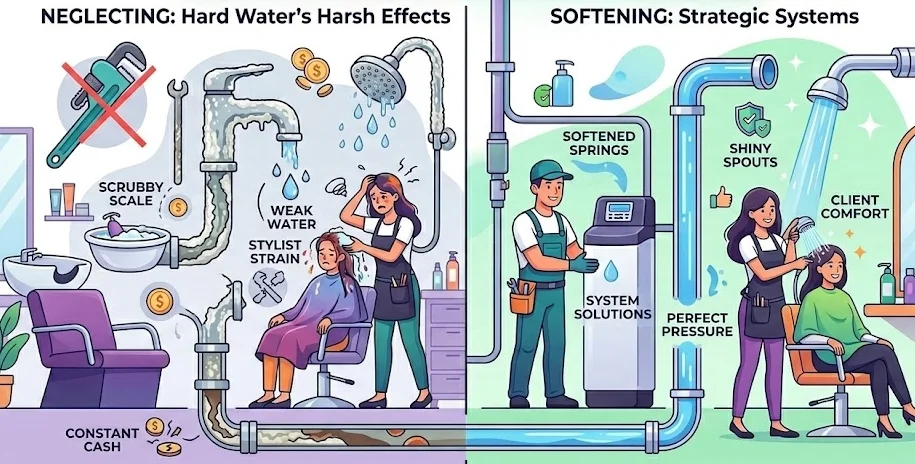
Before finalizing your plumbing plan, ask specifically about water softener installation and what pipe materials make sense given LA’s water profile. Copper pipes handle hard water better than some alternatives, but the right answer depends on your build. A plumber who knows LA’s water conditions — not just general commercial plumbing — will give you a realistic picture.
3. Skipping Proper Drain Sizing for a Salon Environment
Hair. That’s the short answer for why salon drains fail faster than almost any other commercial space. Hair, product residue, color chemicals, and wax all go down those drains daily. Standard residential drain sizing is not built for that volume or that type of debris.
Salons in older buildings — and there are a lot of them — often inherit drain lines that were never intended for commercial use. Retrofitting into one of these spaces without upgrading the drain infrastructure is asking for blockages, slow drainage, and, in the worst cases, backflow that shuts your floor down entirely during a busy Saturday.

Proper commercial-grade drain sizing, combined with accessible cleanout points that your team can maintain, prevents most of this. It’s not glamorous planning, but it’s the kind of detail that separates a salon that runs smoothly from one that’s constantly dealing with maintenance calls.
Getting the plumbing right in a salon build isn’t just about passing inspection. It’s about making sure the space actually works the way your business needs it to, every single day. In cities, where build costs are high, and clients have plenty of options, those operational details matter more than most people expect before they open.