

Australians are booking international trips at a rate that hasn’t been seen in years. Tourism Research Australia is projecting over 12.6 million outbound trips in 2025, and if you’ve tried booking flights to Europe lately, you already know what that’s doing to prices.
The average multi-week international trip now runs somewhere between $5,000 and $10,000 per person — more if you’re travelling with family or stretching the itinerary. A household of four heading to Japan or Italy is looking at numbers that make most savings accounts nervous.
The question isn’t whether you want to travel more. It’s whether the money side is actually set up to make it happen without coming home to a financial mess.
The fees that eat quietly
Most people sit down and calculate flights, accommodation, and a daily spending allowance. What they don’t account for is what disappears in the gaps. International transaction fees on a standard credit card typically run 2–3% on every purchase. ATM withdrawals overseas add another layer — often a flat fee on top of a conversion margin. Across two weeks of normal spending, that adds up to a meaningful chunk of budget that never went toward anything you’d remember.
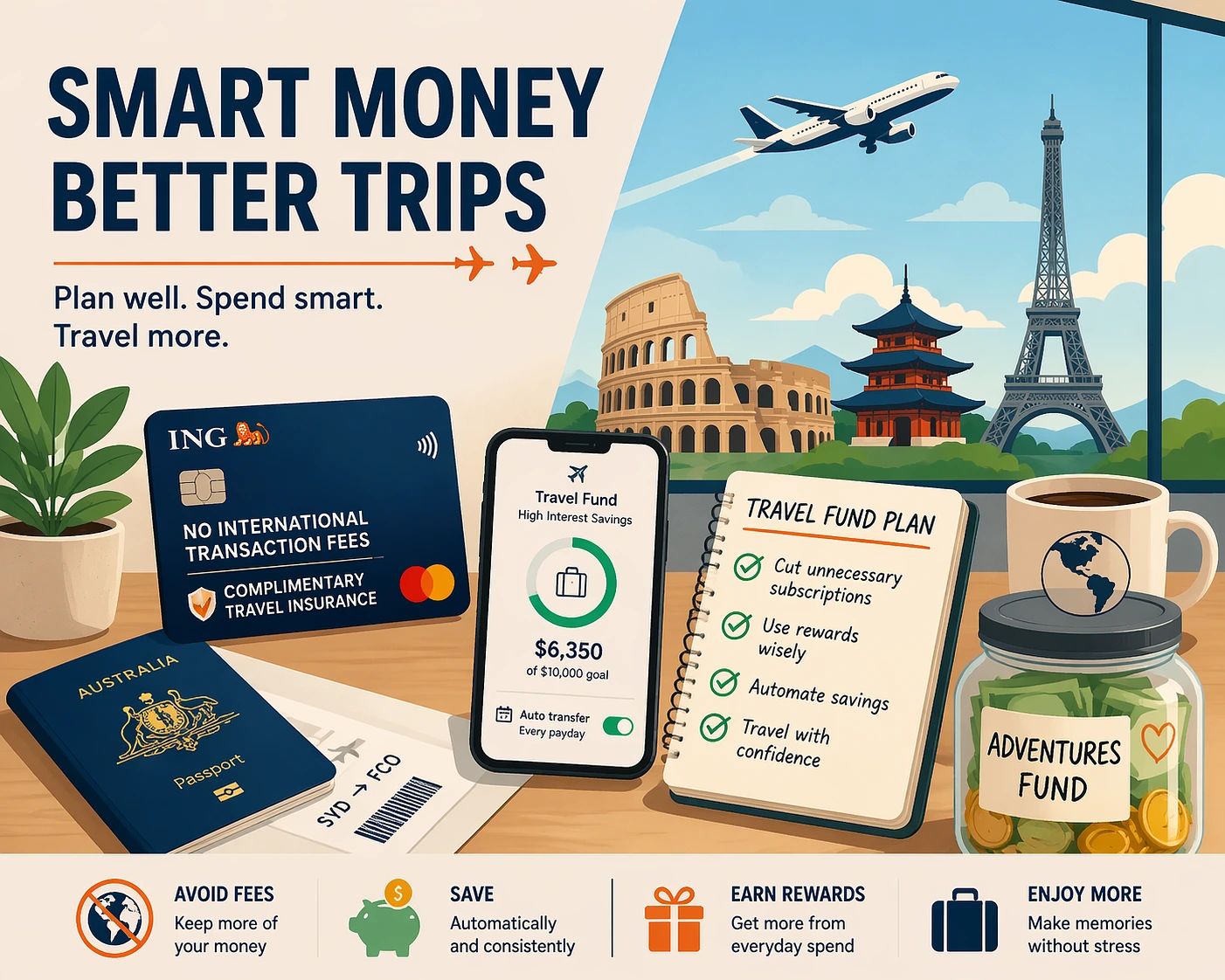
A travel-specific card cuts most of this out. A travel credit card from ING waives international transaction fees and includes complimentary travel insurance. That second part is worth paying attention to — travel insurance is a cost most people price separately, and getting it bundled into a card you’re already using changes the actual out-of-pocket cost of the trip.
Building the fund without gutting your life
The round-up feature most banking apps offer now is genuinely underrated. Every purchase rounds to the nearest dollar, and the difference sweeps into savings automatically. Across a year of daily transactions, it quietly stacks money you didn’t have to think about.
The bigger lever most people overlook is the subscription audit. Bank statements usually turn up several things people forgot they were paying for — a streaming service that slipped out of a free trial, a fitness app from some January motivation surge, software that does something a free tool already handles. An hour going through recent transactions tends to surface recurring charges that stopped being useful a long time ago.
Rewards cards are worth using if you’re paying the balance in full every month. Routing grocery runs, utility bills, and regular household spending through a points-earning card accumulates enough for flight credits or upgrades over the course of a year. Carry a balance, and the interest cancels out the rewards. The maths only works one way.
What ties it together is automation. A fixed transfer to a dedicated high-interest savings account on payday, before the money mixes with everything else, means the travel fund grows regardless of how the month felt. Treating it like a non-negotiable bill rather than whatever’s left over removes the decision entirely — which is exactly why it works.