

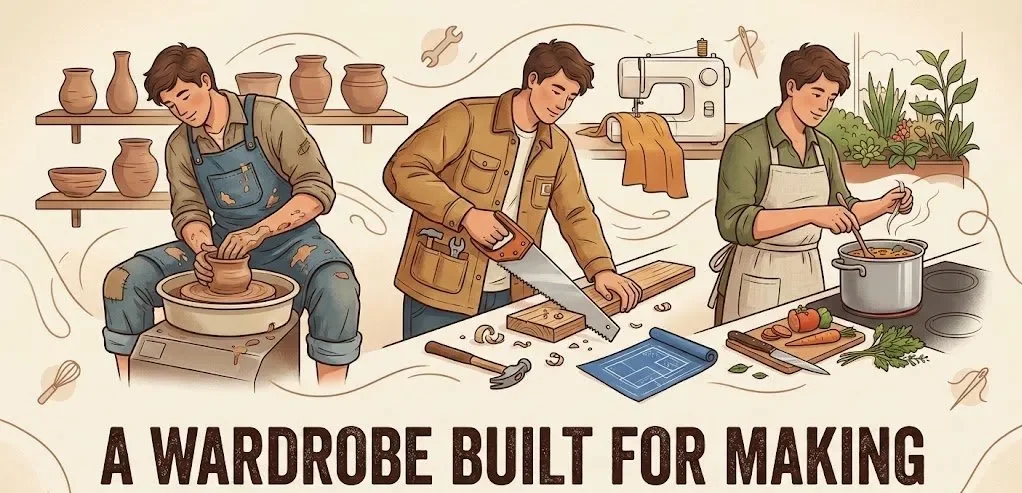
For years, clothing has been chosen for how it looks in a moment rather than how it works across a day. Outfits are planned for angles, occasions, and impressions. Yet most of life happens while doing something else entirely: cooking, fixing, rearranging, experimenting, hosting, learning.
A quiet shift is happening back toward clothes that support activity. Not anti-style, simply pro-participation. A wardrobe built for making things does not interrupt life. It moves with it.
Participation Over Presentation
Certain clothes limit behavior without you noticing. When garments feel delicate or restrictive, you hesitate. You avoid leaning on surfaces, postpone messy jobs, and promise yourself you will start once you change. Often, you never do.
Practical clothing removes that pause.
- You cook immediately instead of planning it.
- You clean as you go rather than scheduling it later.
- You try ideas while they are fresh.
Clothing becomes permission rather than protection. The difference seems small, but it changes daily habits. Spontaneous action replaces careful delay.
Confidence Comes From Readiness
We often connect confidence with polish. Yet there is another kind that comes from readiness. When what you wear allows bending, lifting, and moving freely, you stop negotiating with yourself before starting tasks.
- You offer to help because you can.
- You host casually because nothing feels precious.
- You experiment because mistakes are manageable.
People frequently look more comfortable in functional clothing because they are not monitoring it. Their attention belongs to the moment instead of the outfit.
Materials That Record Living
Garments designed for use age differently. They soften, adapt, and feel familiar. Marks stop looking like damage and begin to look like memory. A favorite piece becomes connected to routines rather than seasons.
You remember baking mornings, late dinners, and projects finished while wearing it. The item becomes part of the activity rather than a decoration around it.
This explains why practical pieces often last longer in wardrobes. They are not rotated for novelty. They are reached automatically.
Creativity Needs Low Consequences
Many hobbies fail to begin because of one small worry: the mess. Creativity rarely starts in perfect conditions. It starts when the cost of trying feels low.
A protective layer removes hesitation. You attempt new recipes, new materials, and unfamiliar techniques because you are prepared for mistakes. Even simple choices help you begin. You can start by choosing items designed for activity, and discover premium kitchen aprons at Aprons.com as an example of clothing made for real use rather than careful observation.
Often, creativity is not blocked by a lack of ideas but by friction. Remove friction, and ideas surface naturally.
Dressing Shapes Habits
People underestimate how clothing influences behavior. Dress cautiously, and you move cautiously. When you’re dressed ready, you begin sooner.
A making-focused wardrobe encourages momentum. You fix problems immediately instead of listing them. You cook more frequently because preparation feels smaller. You stay engaged longer because nothing distracts you.
Habits form from repetition, and repetition becomes easier when clothing supports action.
Home Life Feels Different
Clothing also affects the atmosphere. Homes feel more active when people feel comfortable participating in them. Cooking turns into conversation. Cleaning becomes shared rather than postponed. Small projects appear because starting feels simple.
The environment does not change through decoration alone. It changes through behavior, and behavior often begins with readiness.
Style That Happens Afterwards
This approach does not reject aesthetics. It changes their order. Life comes first, appearance follows.
Interestingly, people often look better in clothes built for activity. Ease replaces stiffness. Movement replaces posing. The overall impression becomes natural rather than arranged.
The best outfits are not planned around the day. They survive the day.
A Wardrobe That Encourages Living
A wardrobe built for making things invites participation. You forget about what you are wearing because you are busy doing something else. Meals, repairs, hobbies, and conversations take priority.
Clothing does not need to demand attention to be meaningful. Sometimes its purpose is to remove barriers between intention and action.