

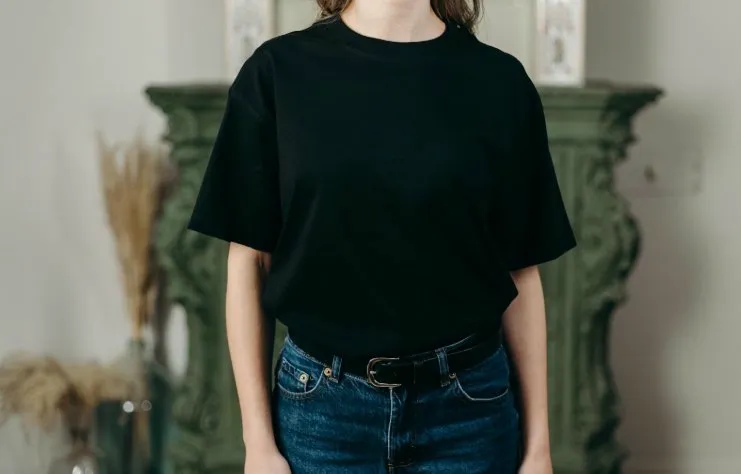
You may simply think that the label on your clothes is the thing that matters the most, and that having a familiar brand name is the one that is going to give you confidence or make you look good, but the thing is that in the majority of cases, you are not going to see that label even after you have put something on. The truth of it is, what you will really find is whether you are comfortable or you are having to readjust it every couple of minutes- and that may come down to fit and fabric, so read further to find out.
Nobody Sees the Tag, Everyone Sees How You Wear It
You can buy something that looks amazing on a hanger and still feel slightly wrong in it all day because it might pull across the shoulders or cling in places you weren’t expecting it to, and so on. It might just not sit properly on you, even if it did on a mannequin. If that’s the case, you’re going to have a low level of discomfort the whole time you’re wearing it, and that’s going to add up to something much bigger by the end of the day.
This is not a mere emotional matter. The experiments were conducted by researchers Hajo Adam and Adam Galinsky in the year 2012 and published in the Journal of Experimental Social Psychology under the name of enclothed cognition. They discovered that when the participants actually put on a few pieces of clothes, they physically affected the performance of the participants on cognitive tasks, making them sharpen their attention or change their behaviour. The garments were not an adornment. Something was happening to their brains. In their study, they now wear lab coats instead of their favourite jumper, but the same principle applies: what is on your body influences what is in your head. When an item fits well and is comfortable, you do not use the mental energy on that annoying little voice in your head that tells you your waistband is pinching or your sleeve is climbing up your arm. You just get on with things.
Mintel’s 2025 report on the US adult clothing market put some numbers to what most of us already suspected 78% of adults care more about comfort than trends when buying clothes, and 42% said they struggle to find things that actually fit. That’s almost half the adult population, not quite comfortable in what they’re wearing on any given day. ZAVA’s research on sizing across major brands found that 66% of women say how their clothes fit has a direct effect on their confidence. Which makes sense, doesn’t it? You put on something that sits right, and you stand a bit taller, move a bit more freely. Put on something that keeps pulling or bunching, and you spend the whole day tugging at it instead of thinking about literally anything else.
It’s wise to remember that a good fit doesn’t mean squeezing into a small size or going after a specific number on a tag because although they’re a guide, sizes do tend to be different in different places. ZAVA looked at what a US size 10 actually measures across different brands and the gap was ridiculous Urban Outfitters’ size 10 came in several inches smaller in bust, waist, and hips compared to Mango’s size 10. Same number. Completely different garment. So it’s always good to try things on, and try a size up or down if you’re not sure, just to be on the safe side, and that way you’ll be comfortable and not distracted by your clothes.
That’s why something like well-cut plus size tops can be so good, and a lot more important than any designer label could be when the shape is right, everything just feels better and literally falls into place, and you can just get on with your day.
Fabric Changes the Whole Outfit
Fabric is an item that a person may not give a second thought or even undervalue until they find themselves in garments that are terribly uncomfortable. Anyway, when something is hard and rough, or not breathable, you will feel it, and it will be horrible to have to wear it all day long. On the other hand, when something becomes too long and loses its form in a short period, you will also notice that, and that is not a better situation either.
In 2024 Scientific Reports published a study – How perceived sustainability influences the preferences of consumers in clothing – and one of the aspects they explored was what making clothing comfortable actually is. They put it into 3 components: thermal comfort (is it keeping you at the right temperature, is it breathable), tactile comfort (how does it feel on your skin), and aesthetic comfort (does wearing it make you feel good about yourself). The three are all interconnected. A top may be gorgeous on the rack, but it will not matter at all when the material literally traps your heat or scratches your arms. Your skin is going to win over your eyes each and every time.
The thing you will actually want to look out is the soft fabrics that move with you and preferably the clothes should be breathable too to add to the comfort. And next there will be the bulkiness of the fabric, which actually is likely to vary across seasons, so you will also need to consider that. It works essentially in the business that once you get one right, then it is likely that you are not going to think about it, but once you get it wrong, you will be aware of it, and it will all you are capable of thinking.
The online shopping return data tells you everything you need to know about how badly this goes wrong for people. About 70% of fashion returns happen because of fit or style problems. Clothing is already the most-returned product category Shorr Packaging’s 2025-2026 consumer survey of over 2,000 Americans found that 65% of people cited clothing as the thing they return most often. And roughly 63% of online shoppers admit to ordering multiple sizes of the same item on purpose because they already know the sizing will probably be wrong. Billions of pounds worth of clothes shipped back every year, and most of it comes down to the same two things: the fit wasn’t right, or the fabric felt nothing like what they expected from the photos.
All the branding in the world doesn’t stop someone hitting “return” when the material feels cheap on their skin or the cut makes them uncomfortable.
Why a Brand Name Won’t Save a Bad Fit
A well-known brand doesn’t automatically mean something’s going to fit your body well. Bodies are all different, and shapes are different, and what works great for one person can feel really awkward for someone else.
The sizing mess goes back further than you’d think. The US actually had standardised sizing at one point the National Institute of Standards and Technology published official guidelines in 1958. By 1983, brands had abandoned them entirely. Then vanity sizing crept in, where brands made their labelled sizes progressively larger so shoppers could feel better about the number on the tag. TIME reported that a size 14 dress in Sears’ 1937 catalogue had a 32-inch bust. By 2011, that same bust measurement had become a size 0. The numbers stopped meaning anything real a long time ago.
A TODAY Style survey of close to 1,500 women found that 71% agreed clothing sizes make no sense across brands, and 63% of those women said the inconsistency left them genuinely frustrated. True Fit’s research showed that most women wear about three different sizes depending on which brand they’re buying from. Three sizes. Same body. Different shops. That should probably tell you everything you need to know about how much a label is actually worth as a guide to whether something will work for you.
And the label… well, it might impress someone for half a second, but you’re the one who’s got to wear the clothes, and if the fit is bad or the material is uncomfortable, the brand name isn’t going to fix that, no matter how well-known it might be.