
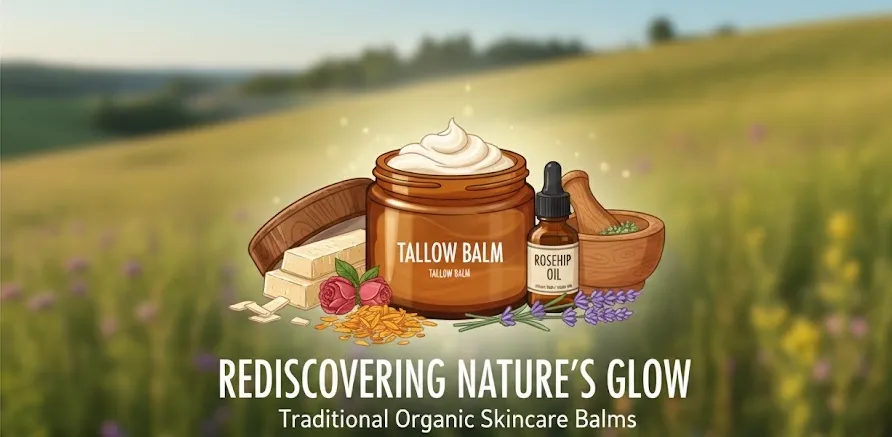
People have chased after great skin for ages. But at some point, we bought into the idea that labs had all the fixes—stuff loaded with chemicals you can’t even say, preservatives built for lasting on shelves more than helping your face. Lately, though, folks are flipping back to basics. Hard.
The organic skincare market sat around $15.4 billion in 2026 and looks set to hit $34.2 billion by 2035. That’s no quick fad. It’s a real change in what people slap on their bodies. Right in the middle of it? Old-school stuff your grandparents would spot right away—like tallow balms, herb mixes, and no-fuss recipes that team up with your skin instead of fighting it.
What Our Ancestors Already Knew
Before skincare turned into this massive industry with fancy serums and creams promising miracles, it was straightforward. Practical. Cleopatra didn’t mess with a 10-step routine. She jumped into milk baths with honey because it softened skin and knocked out bacteria for real. Egyptians grabbed aloe vera for sunburns and made eye stuff from malachite that fought infections. This wasn’t pampering—it was smart survival in tough desert heat.
Swing over to ancient India, and Ayurvedic folks mixed up turmeric pastes to chill out inflammation and sandalwood to fix dry, cracked skin. They whipped up ubtans—scrubs from chickpea flour, turmeric, and milk—that scrubbed off dead stuff without yanking out your natural oils. Plenty of these tricks still show up in Indian homes today, handed down because they deliver.
The Greeks and Romans kept it simple too: olive oil to hydrate, clay masks to pull out junk, rosewater to tone things up. Chinese healers brewed up green tea and ginseng tonics full of antioxidants that science is just now catching up on. Every group figured out fixes from what was around them, and those stuck for thousands of years. Why? They worked.
Why We Started Looking Backward
Flip open most mainstream skincare bottles, and the ingredients sound like a lab report. Parabens, phthalates, fake smells, sulfates—all there to make stuff last longer, feel nice, or cover up weird odors from other chemicals. Trouble is, more and more studies show what happens when this junk soaks into you.
Parabens act like estrogen knockoffs. Research ties them to hormone messes, with some links to breast cancer risk and fertility headaches. They’ve turned up in breast tumor samples—not proving they cause it, but enough to make you pause. Phthalates, often snuck in as “fragrance,” get blamed for reproductive glitches like wonky periods, low sperm counts, and even early births.
Then there’s the planet hit. The beauty world cranks out about 120 billion packaging units yearly, mostly plastic heading to dumps or seas. Factory runoff trashes water. The setup screams convenience and cash, not skin care or earth care.
So yeah, people wonder: why smear this on when my great-grandma did fine with fat from the kitchen and some olive oil?
The Science Behind Tallow
Tallow? Sounds old-timey because it is. It’s fat rendered from grass-fed beef, used in European salves forever. Native Americans slapped it on wounds. Your ancestors probably had a version stashed away.
What makes it tick: tallow’s fats line up close to your skin’s own oil—about 50-55% saturated fats matching your lipid barrier. Not random—animal fats and human skin share building blocks.
- Oleic acid hydrates deep without grease.
- Stearic acid beefs up the barrier to hold moisture and block irritants.
- Palmitic acid fights microbes.
- Plus vitamins—A for fresh cells, D for fixes, E against damage, K for evening out spots.
A 2024 look at tallow skincare showed it cut transepidermal water loss—your skin drying out—by 20-30%. For eczema or psoriasis folks, it’s a win since it skips fragrances and junk that spark flare-ups. It just hydrates. Like skin wants.
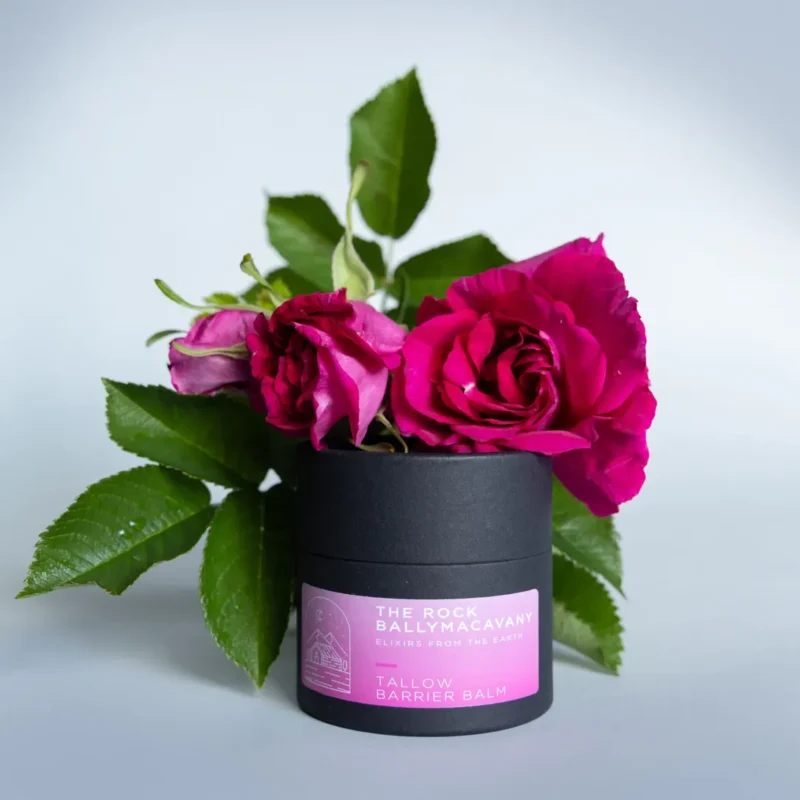
Stuff like Tallow Barrier Balm from spots like The Rock Ballymacavany has fans for keeping it basic—tallow, olive oil, beeswax. No smells, no keepers, no fancy extras. Rub it on post-shower, it soaks in, skin stays happy. Done.
The Sensory Side Nobody Talks About
Skincare gets too mechanical sometimes, missing the feel of it. Traditional balms hit your senses in ways those pump lotions never touch.
Grab a rose-infused tallow balm and work it into your hands. It’s thick, smooths out as it warms up. Smell is light, real, pulls you in. Egyptians got this with lavender for calm. Indian ways threw in neem and sandalwood for clear skin and a clear head.
Science backs it: real plant smells tweak stress hormones and lift moods. A quick two-minute rub-in drops cortisol. You won’t get that from lab-made “beach wave” scents.
It turns daily drudge into a mini break. Take your time. Knead it in. Watch it melt and vanish. Spas feel good because they hit sight, touch, smell all at once. These balms sneak a bit of that home.
Sustainability That Actually Means Something
“Sustainable” gets tossed around so much it’s empty. Every label claims it. But organic, small-run skincare adds up different.
Organic growing burns 45% less energy than regular farming. No fake pesticides means up to 70% less pollution in water. Pulling tallow from grass-fed cows and oil from family plots backs farming that builds soil back up.
Small batches skip huge factory drags. No non-stop plants, no hauling stuff worldwide, no giant storage for expiring junk. Lots use glass, refills, or stuff that breaks down because buyers care—and small ops can switch easier than big corps stuck in deals.
Trash drops big time. A three-month balm jar beats five plastic bottles. Some go full DIY, zero waste.
Making Your Own (It’s Easier Than You Think)
Whipping up tallow balm? Not rocket science. If you melt butter, you’re good.
- Basic Whipped Tallow Body Butter: Grab half a cup grass-fed tallow—render from suet or buy ready from farms. Melt slow in a double boiler. Stir in two tablespoons olive oil, maybe 10 drops lavender oil for smell. Cool till edges firm, then whip with a mixer till fluffy. Jar it. Killer body butter, beats store stuff.
- Tallow Face Balm: Quarter cup tallow, tablespoon rosehip oil, few drops frankincense. Rosehip packs vitamin A and fats for scars and tone. Frankincense calms swelling. Melt, mix, cool, store. Dab a bit on damp skin.
- Simple Tallow Lotion Bars: Equal tallow and beeswax, melt, pour in molds, set. These bars melt on touch, great for bags—no mess.
- Tweak as needed: tea tree for zits, calendula for eczema, shea for dry spots. You control it, tweak for your skin.
Buying Smart (If DIY Isn’t Your Thing)
Not keen on kitchen fat? Cool, market’s grown. Options out there.
- Hunt real certs: USDA Organic skips fake pesticides on plants; Ecocert checks sourcing. Scan lists—if “fragrance” hides without details, likely synthetics with phthalates. Short lists rule. Know the stuff.
- Oily skin: Light mixes like tallow with jojoba soak fast. Dry? Rich with shea or cocoa. Sensitive? Unscented to dodge triggers.
- Patch test always: dab inside wrist or ear, wait a day, check reactions. Even naturals can bug some.
Clearing Up the Myths
Myths block tries:
- “Tallow’s greasy.” Nah, done right it sinks in quick. Key: damp skin, small amount.
- “Natural skips work like synthetics.” Tests show tallow moisturizes same or better without extras. Synthetics feel slick from silicones but don’t build long-term health.
- “Organic’s hype.” Some yes, but certified small makers with full lists play straight, not big brands faking “natural.”
Where This Is All Heading
Traditional organic skincare push isn’t stopping. Sustainable beauty market eyes $433 billion by 2034. Fastest bits mix old know-how with new standards.
Trends: fermented plants for stronger hits. “Slow beauty” like slow food—less stuff, better, longer use. Brands link jars to apps for mindful rubs.
But core? Know your stuff on you. Work without risks. Skip plastic piles for moisture.
Tallow balms check it. Great-grandma had it right. Took us time to loop back.
Grab your own render or a Tallow Barrier Balm—you join the shift to real over hype. Your skin feels it. Trash bin too.