

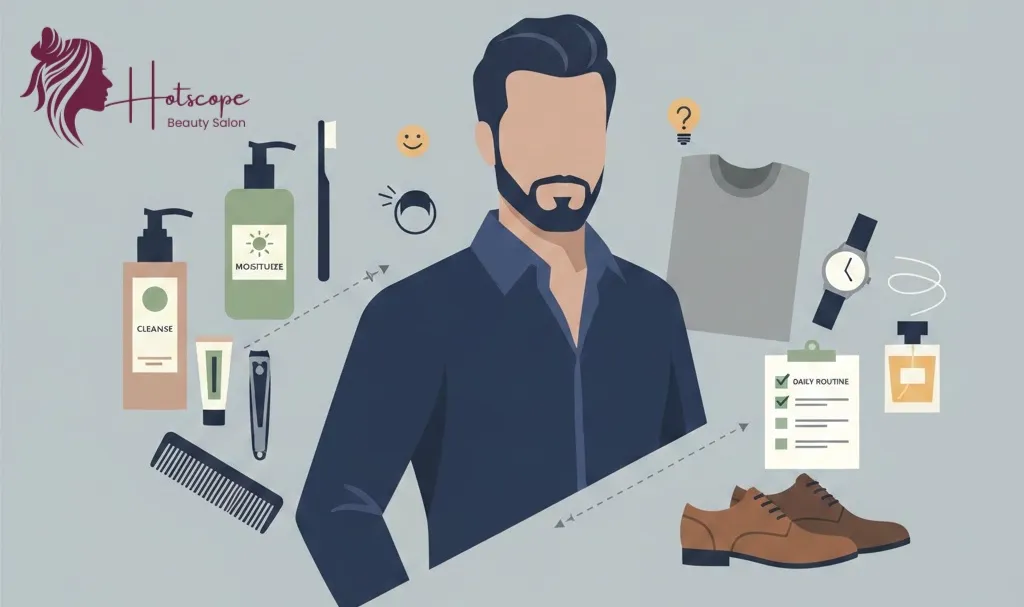
Most advice about confidence makes it sound like a mindset problem. Think positive, stand tall, believe in yourself. Which is all fine until you’re staring at yourself in the bathroom mirror on a Monday morning feeling like absolute rubbish and no amount of positive thinking is going to fix the fact that you look like you slept in a hedge.
Here’s what nobody frames properly: the physical stuff matters. How you wash, groom, dress, and generally present yourself has a direct line to how confident you feel for the rest of the day. Not because you’re vain. Because your brain pays attention to the effort you put in and adjusts your self-image accordingly. A study found 74% of people who made grooming a consistent habit felt more attractive — and that carried straight through into their work, their relationships, how they talked to strangers.
That feedback loop — effort in, confidence out — is what this whole piece is about.
The boring stuff that actually works
Nobody wants to hear this, but the grooming habits that make the biggest difference are deeply unsexy.
Wash your face. Cleanser, morning and night. Moisturise after. Put sunscreen on if you’re going outside for more than twenty minutes. That’s your skin done. If you want to exfoliate a couple of times a week with something gentle, go for it — your skin will look less dull and whatever else you put on it will actually absorb instead of sitting on the surface.
Brush your teeth. Twice. Floss. Mouthwash if you can be bothered. A healthy set of teeth does more for your face than any amount of expensive moisturiser ever will, and it costs next to nothing.
Nails. Trim them, clean under them, file them if they’re rough. Two minutes once a week. Nobody consciously judges your nails, but subconsciously? Absolutely. Rough, dirty nails undermine everything else.
Total time for all of this: about fifteen minutes a day. Not fifteen minutes of meditating about your worth as a person. Fifteen minutes of actual, physical maintenance. And if you do it every day — properly every day, not just when you’ve got something on — you will feel different within a couple of weeks. Not transformed. Just more together.
Hair is a bigger deal than most people admit
You know that feeling after a fresh haircut? Where you catch your reflection somewhere and think “oh, alright then”? There’s actual psychology behind that. Barbers see it all the time — someone walks in looking tired and flat, walks out standing differently. Same person, same clothes, just better hair.
Finding a cut that works with your face rather than against it makes a stupid amount of difference. Rounder face? Shorter sides add structure. Finer hair? Textured layers give it body. Facial hair needs the same thought — a shaped beard or a clean shave both say “I did this on purpose,” which is basically what confidence looks like from the outside.
Scalp health is the bit most blokes ignore entirely. Dandruff landing on your shoulders is one of those things you pretend isn’t happening while being silently mortified about it. Wash your hair two or three times a week with a decent shampoo. Not every day — that strips the oils out and makes it worse. Just enough to keep things healthy.
Then there’s thinning. It’s incredibly common, it affects confidence far more than most men will openly say, and it tends to creep up gradually so you don’t realise how much it’s changed things until you see a photo from five years ago.
Worth knowing that the options have improved massively. A Hair transplant UK Harley Street procedure using FUE now carries success rates between 85 and 95%. The UK hair transplant market has grown from about £101 million in 2023 to roughly £335 million — that growth tells you something about both the demand and the quality of results people are getting.
Not everyone needs to go that route. But if hair loss is quietly eating at you, pretending it isn’t won’t fix anything.
Clothes don’t need to be complicated
Personal style sounds like something that requires a subscription to Vogue and an opinion about pocket squares. It doesn’t. It’s knowing what looks decent on you and wearing it regularly instead of grabbing whatever’s clean off the floor.
You already own stuff you feel good in. Maybe it’s a jacket that fits your shoulders properly. Shoes that always get a compliment. A colour you’ve been told suits you. Those pieces work for a reason — they fit well, they suit your colouring, or they just feel right. Figure out what they have in common and buy more things like them.
Fit matters more than anything else. A £30 shirt from Uniqlo that sits right on your frame will look better than a £200 designer thing that doesn’t. If something’s close but not quite there, take it to a tailor. Costs a tenner for most alterations and the difference is embarrassing.
Base around neutrals — navy, grey, white, black. They go with everything, they never date and you won’t have to stand in front of your wardrobe at 7am wondering if brown and green really do go together. Add one personal thing. A watch. Some characterful trainers? Some of yours, as opposed to generic.
And it’s such an obvious thing but is so often overlooked: if something feels uncomfortable, then no matter how great you might think it looks. You’ll squirm, you’ll yank at it, and then all day long you will be distracted by how wasted your collar is. Looking good and feeling comfortable need not be enemies. It’s the foundation of it.
Posture ties everything together. Pull your shoulders back, straighten your spine, raise your chin. You could wear a bin bag and you’d look more confident than with someone in a fitted suit who’s hunching. Costs nothing. Takes no time.
What you eat shows up on your face
Skin is basically a scoreboard for what’s happening inside your body. Load up on processed rubbish and sugar and it’ll show — dull complexion, breakouts, that slightly grey undertone that makes you look knackered even when you’re not.
Turn that around and eat mostly real food, like vegetables, nuts, fish, berries (things that grew or swam at some point) and your skin gets clear, your energy evens out and you stop looking like you could use a week off.
You do not require a meal plan or even a nutrition coach. Just err towards food that’s been around longer than factories, drink enough water so you aren’t permanently dehydrated and get some sleep. Seven to eight hours. Real sleep, not seven hours in bed, four of them spent on your phone.
Movement helps too. Walk. Ride a bike. Get a bodyweight workout in your spare room. Not necessarily a workout at the gym — anything that tells your body it’s time to move regularly. Currently, the research linking exercise to improved body image and self-esteem is overwhelmingly positive. To move is a way of feeling a little better about how we look. Simple as that.
Scent is a tiny thing with an outsize punch. You don’t need to be in fancy clothes for a special perfume to make you feel put-together (and it doesn’t have to be an expensive fragrance). Find a scent you love — something citrus-y if you like fresh, amber or woody if you prefer warmth when you hug someone in the morning. Dab some on your wrists and neck with your fingers before you dash out of the house. No one else would even see it. You will, though, and that little boost counts over a full day.
Sticking with it
Reading about grooming routines and having a grooming routine are two entirely different things. For the first week, everyone is excited. By week three, the moisturiser is languishing in a corner and you’re washing your face with whatever shower gel’s going spare.
Make it simple enough that there is no excuse.” Fifteen minutes in the morning. Cleanse, moisturise, tame your hair, make sure your outfit works. That’s it. You’re not aiming for perfection. You’re going for a steady effort, that is, which over time rewires how you feel about yourself.
For some people, laying out clothes the night before can even prevent stress from mounting in the morning. Others set a reminder on their phone for the first month until the habit feels solid. Whatever gets you through the part where it still feels like one more thing to do and not just how you kick off your day.
The whole thing here isn’t become addicted to appearances. It’s to stop neglecting them. There’s a big difference between not even trying and spending two hours in hair and makeup, somewhere in that space is where most people’s confidence actually lies.