

The majority of gardeners do not have time to waste on their gardens. You have work, family, shopping, and somewhere in between it all, you have to keep plants alive and the lawn clipped. It begins to resemble another job unless you take care of the way you do things.
But a garden that mostly runs itself isn’t wishful thinking it’s a planning problem. And while you’re figuring out how to spend less time weeding and watering, there’s something worth thinking about that gardening advice rarely covers: what all that outdoor time is doing to your skin. Two hours of weekend yard work under direct sun, hands deep in soil, sweat pooling everywhere your skin takes a beating whether you realise it or not.
Start Smaller Than You Think
The temptation when you get into gardening is to go big. Raised beds everywhere, a vegetable section, flower borders. Then, after three weeks, you’re overwhelmed, and nothing’s getting proper attention.
Pick one thing. A single raised bed. A few containers on the patio. Something you can handle in twenty minutes a few times a week. Raised beds are especially good for people with packed schedules. Weeding drops dramatically because you control the soil, and you’re not battling whatever’s been growing in your yard’s native dirt for years. Get that running smoothly first. Then expand.
Worth seeing what each option actually asks of you:
| Garden Type | Weekly Time | Best For | Weeding Effort |
|---|---|---|---|
| Container garden (patio) | 15–20 min | Small spaces, renters | Almost none |
| Single raised bed (4×8 ft) | 20–30 min | Vegetables, herbs | Low |
| Small flower border | 30–45 min | Curb appeal, pollinators | Moderate |
| Full vegetable patch | 1–2 hours | Serious food growing | High at first, drops with mulch |
Plants That Won’t Punish You for Being Busy
Certain plants really would not mind whether you leave them alone for a few days. Perennials are repeaters and never have to be replanted; many of them also do well on their own once established. Native species are even superior since they already know your climate, your rainfall, and your soil.
In the case of food, cherry tomatoes, zucchini, and lettuce are the ones that grow significantly without requiring much supervision. Most of the climates leave herbs such as rosemary, thyme and oregano undestructible and can be used to form ground cover.
One thing that connects back to skin health: certain common garden plants cause contact dermatitis. Tomato leaves, mint, and even some ornamental species produce compounds that irritate skin on direct contact. If you’ve come in from the garden with unexplained redness or itchy patches on your forearms and assumed it was sunburn, the plants themselves might be responsible. Long sleeves or gloves aren’t just about thorns.
Why Mulch Is Doing Half Your Job
Wood chips, straw, and shredded leaves pile three to four inches across your garden beds and watch how much less work you have to do. Weeds are smoothed out before they begin. The soil retains moisture better, thus the frequency of watering reduces by approximately half during summer in most beds. The soil remains cooler at depths, thus roots enjoy the heat waves.
Organic mulch decomposes with time and replenishes nutrients to the soil. Your earth gets better without your having to be at all. And that is as much like free gardening labour as you will see.
Water Without Having to Remember
Watering by hand is fine when you’ve got nowhere to be. When you don’t, it’s the first thing that gets skipped and skipping watering kills plants quicker than almost anything.
A drip irrigation setup on a timer is cheaper than most people expect. Water goes straight to roots with very little waste, plants stay hydrated while you’re at work or away for the weekend, and you stop having to stand there with a hose every evening. Self-watering pots do the same thing for container setups a reservoir at the bottom feeds moisture upward as the soil dries out.
Reclaim Your Weekends With a Robotic Mower
Mowing takes an absurd amount of time for how little anyone enjoys it. For an average-sized yard, the annual total comes out to roughly 60 to 90 hours across a growing season. That’s entire weekends disappearing into a chore.
A robotic lawn mower runs on whatever schedule you set, trims the grass on its own, dodges obstacles, and docks itself to recharge. You don’t watch it. You don’t push it. Most models operate between 55 and 70 decibels about as loud as a conversation, so early morning or late evening runs won’t bother neighbours.
There’s a skin angle to this that’s easy to miss. Traditional mowing means prolonged UV exposure during peak hours. Most people mow on weekends between 10 a.m. and 4 p.m. right when UV radiation hits hardest. UVA rays, which account for about 95% of UV radiation at ground level, go deep into skin and break down collagen and elastin over time. That’s not just sunburn territory. That’s premature wrinkles, dark spots, and loss of skin firmness from a chore a machine could handle.
Taking mowing off your plate doesn’t just give you Saturday back. It removes one of the biggest unnecessary blocks of sun exposure in your week.
Soil, Skin, and Why Gloves Aren’t Optional
Gardening gloves aren’t just about comfort. The soil in your garden is full of bacteria and fungi that most people don’t think twice about.
Sporotrichosis, nicknamed “rose gardener’s disease” is a fungal infection caused by Sporothrix, which lives in soil, decaying plants, and on thorns. It enters through small cuts and scratches, exactly the kind you pick up while gardening bare-handed. The CDC flags gardening as one of the higher-risk activities for this infection. Common soil bacteria like Staphylococcus and E. coli can also enter through any break in the skin, even ones too small to notice. And tetanus spores are just sitting there in the dirt.
Quick checklist before your hands touch soil:
- Wear proper gardening gloves with wrist coverage not thin disposable ones
- Cover any existing cuts or cracked skin with waterproof bandages
- Make sure your tetanus vaccination is current (every 10 years routine, but within 5 years if you get a soil-contaminated wound)
- Wash hands with soap and water as soon as you’re done, don’t wait
Takes about a minute. Skipping it can mean weeks of antifungal treatment or an avoidable trip to the doctor.
Dealing With the Sun
Gardeners accumulate a lot of UV exposure without realising it. A review in the journal Microbiology Spectrum listed gardeners among the professions at highest risk for UV-related skin damage, alongside construction workers and agricultural labourers. You might not think of weekend gardening as an occupational hazard, but spread across a full growing season, those hours in the sun stack up.
What actually helps:
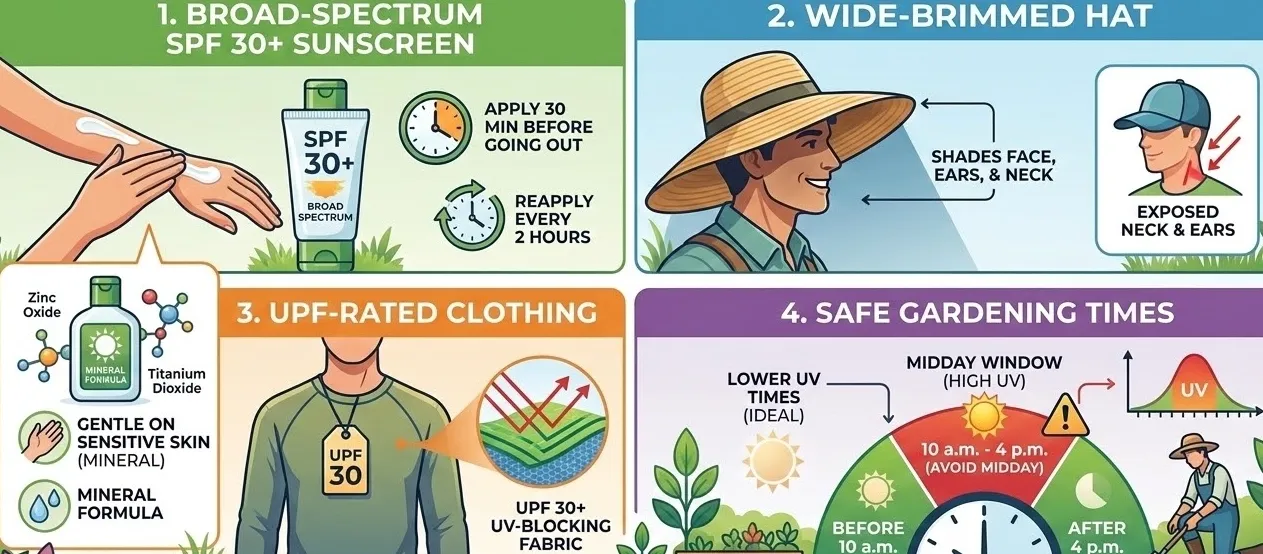
- Broad-spectrum SPF 30+ sunscreen on all exposed skin, applied 30 minutes before you go out and reapplied every two hours. Mineral formulas with zinc oxide or titanium dioxide tend to be gentler on reactive or eczema-prone skin.
- A wide-brimmed hat. Caps leave your ears and neck wide open.
- UPF-rated clothing if you’re going to be out for a while. A UPF 30 shirt blocks most UV radiation before it reaches your skin.
- Garden before 10 a.m. or after 4 p.m. whenever you can. UV intensity drops significantly outside that midday window.
UV radiation drives photoaging, the wrinkles, the dark spots, and the elasticity loss that makes skin look older than it is. These aren’t drastic lifestyle changes. They’re small habits that compound over years.
When You Come Back Inside
Sweat, soil residue, sunscreen layers, plant oils, all of that sitting on your skin for hours isn’t doing it any favours. What you do in the five minutes after gardening matters.
- Wash hands and forearms with a gentle, pH-balanced cleanser. Harsh antibacterial soap strips natural oils and dries everything out.
- If your hands are cracked or rough from the work, put moisturiser on while the skin is still slightly damp; it locks in more hydration that way.
- Face and neck: something with aloe vera or niacinamide calms heat and UV irritation.
- Check for new scratches or thorn pricks you didn’t feel while working. Clean them properly and cover.
- Change out of sweaty clothes rather than lounging in them. Damp fabric trapped against skin breeds irritation.
Nothing expensive. Nothing complicated. Just don’t ignore it.
Manual vs Smart Gardening
Seeing the difference side by side makes it pretty clear where the biggest gains are, both in time and skin exposure:
| Task | Manual Way | Smarter Way | Weekly Time Saved | Less Sun Exposure? |
|---|---|---|---|---|
| Mowing | Push mower, 1–2 hrs | Robotic mower on schedule | 1–2 hours | Yes, eliminates peak-sun mowing |
| Watering | Hose by hand, 20–40 min/day | Drip system on timer | 2–4 hours | Moderate, fewer midday trips out |
| Weeding | Pulling by hand, 1–2 hrs | Mulch + ground cover | 45–90 min | Moderate, less time kneeling in sun |
| Soil checks | Guesswork and overwatering | Moisture sensor | 30–60 min | A few fewer unnecessary trips |
| Pest control | Daily plant inspections | Companion planting | 30–45 min | Some, fewer passes through beds |
Tricks That Cut Your Workload
A few approaches that sound basic but genuinely reduce how much time your garden demands:
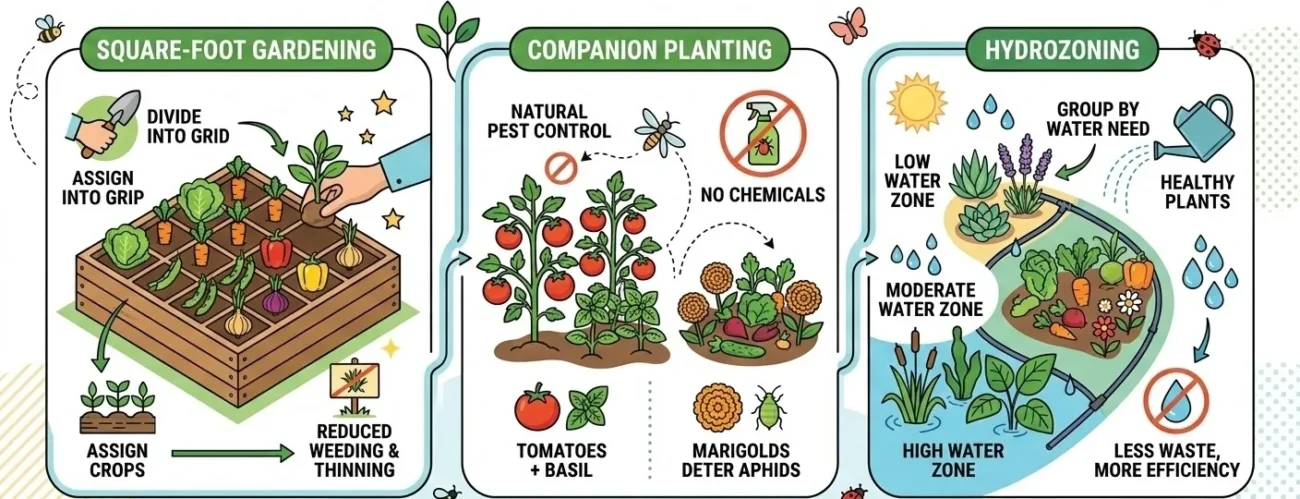
- Square-foot gardening: Divide a raised bed into a grid and assign specific crops to each square. Maximises what you grow per area and mostly eliminates thinning and weeding. Great for vegetables in tight spaces.
- Companion planting: Basil near tomatoes deters certain pests. Marigolds around vegetable bed edges keep aphids away. Old methods, zero chemicals, less time spent on damage control.
- Hydrozoning: Group plants by how much water they need. Stops you from overwatering some things and underwatering others. Less waste, less fiddling, healthier plants across the board.
Building Better Soil Up Front
You pay a small price of taking a few minutes at the beginning of the season and incorporating the compost or organic material into your beds, and save yourself months of labour later. Fertile soil produces good plants. Healthy plants are less susceptible to diseases, require less watering and yield more. Soil of low quality works just the reverse, and you find yourself filling in with excessive attention.
The heavy lifting in this regard is partially taken up by a bag of good compost to be mixed into your beds. No glamorous work, but the reward is a reality.
Ground Cover Beats Endless Weeding
When it comes to pulling weeds by hand, it is bad on the back, it is bad on the hands and it never seems to stop. Creeping thyme, clover, sedum are ground cover plants spread naturally over bare soil and choke out all weeds. They go ahead to add texture and smell to the garden.
The other alternative is landscape fabric under beds. Blocks out the growth of weeds, allowing water to pass. Practical, not beautiful but useful.
Apps and Sensors
Gardening apps monitor the planting time, mark weather changes, and remind users about the need to pay attention to certain plants. The soil moisture sensors inform you when the ground is really dry, rather than you making an assumption.
Investments in small sums which save the most frequent time wasters of garden enterprises: of doing what it does not do, or not doing what it does.
Planning By Season
Break the gardening year into chunks. Spring for planting and soil prep. Summer for maintenance watering, harvesting, watching for pests. Autumn for cleanup, composting, and putting in anything that overwinters.
When you roughly know what’s coming each month, nothing ambushes you. No panicked weekend rescue missions for something you forgot about. Just steady work spread across the year.
A Garden Doesn’t Need to Be Perfect
Some weeds, an overgrown corner, a few brown leaves that’s a garden being a garden. Living things are messy. The best ones have personality and character, not sterile perfection. If it gives you somewhere to decompress, grow something useful, and spend time outdoors, it’s working exactly as it should.
Wear your sunscreen, put your gloves on, and let the robotic lawn mower deal with the grass.