

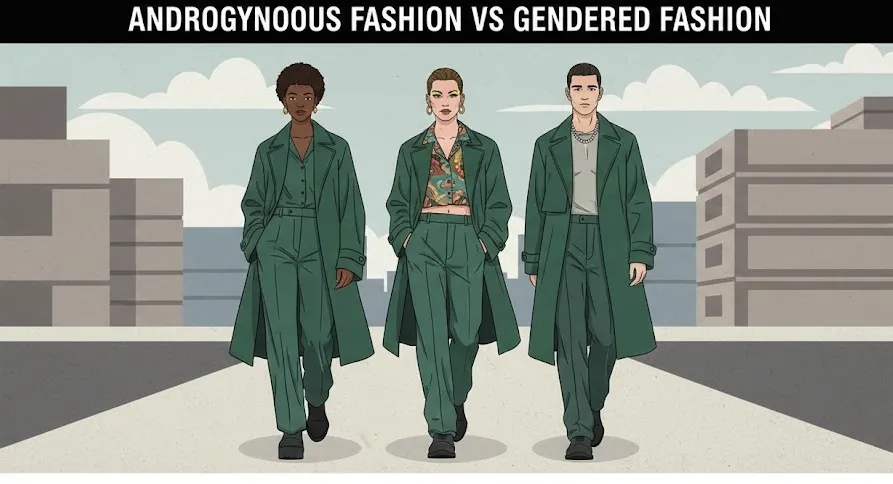
The men’s section and women’s section thing is starting to feel outdated. Walk through any London Fashion Week show this year, and you’ll see the same slouchy trench coat on three different models – one man, one woman, one non-binary. Same garment. Nobody blinks.
That’s the shift happening right now. Androgynous fashion treats clothes as clothes. Oversized blazers, fluid trousers, neutral colours that don’t care who’s wearing them. Gendered fashion does what it’s always done: sharp suits over here for the men, flowing dresses over there for the women. Two separate worlds based on what’s between your legs.
Both still exist. But one of them is growing fast while the other watches its younger customers walk away.
This Didn’t Come From Nowhere
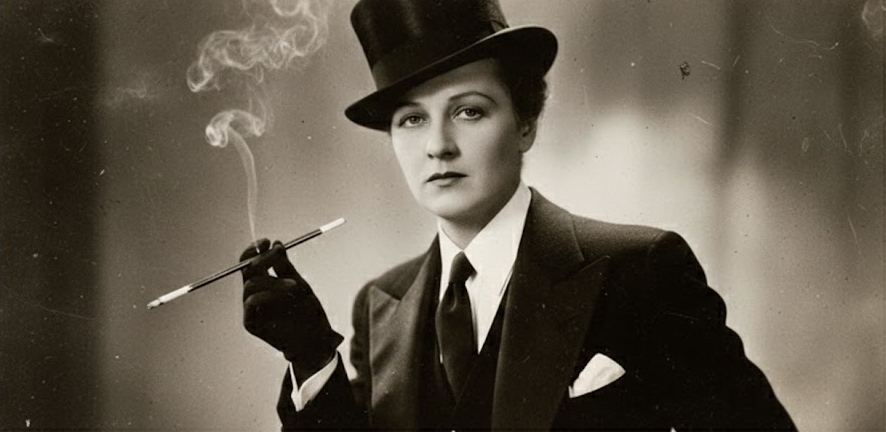
Marlene Dietrich wore tuxedos in the 1920s and scandalized everyone. David Bowie spent the 70s in jumpsuits and makeup. Yves Saint Laurent put women in Le Smoking suits in 1966, and fashion journalists lost their minds.
Then things swung back. Post-war Dior gave us the ultra-feminine New Look – nipped waists, full skirts, women looking like women and men looking like men. That binary held for decades.
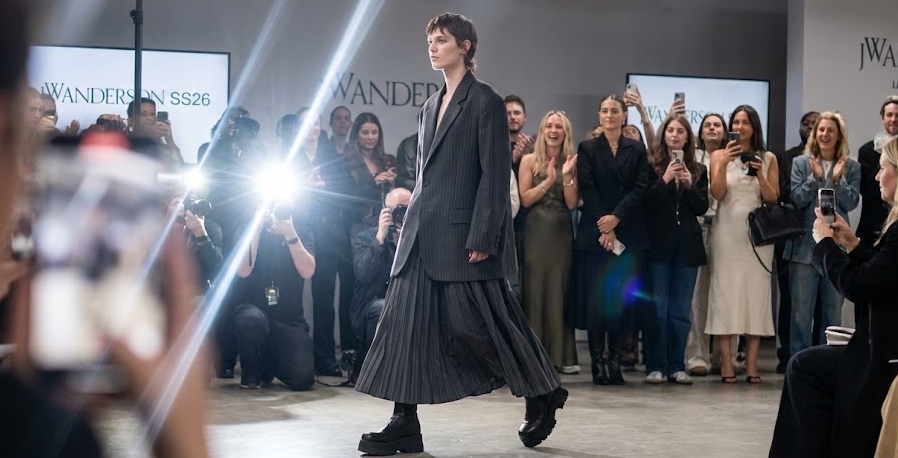
What’s different now is scale. Rick Owens sends models down runways in identical batwing silhouettes regardless of gender. JW Anderson puts men in skirts and cropped Oxford shirts. It’s not one designer being provocative anymore. It’s half the industry moving in the same direction.
The 2026 Runways
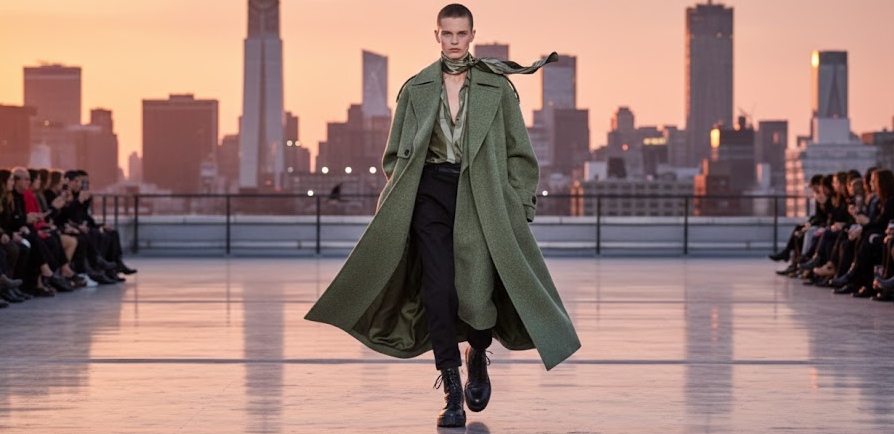
Burberry’s SS26 collection went almost entirely unisex. Those slouchy hunter-green trenches? Designed without a gender in mind. Traditional suiting showed up too, but it felt like the holdover, not the main event.
| Designer | Androgynous Pieces | Gendered Pieces |
|---|---|---|
| Burberry SS26 | Slouchy trenches, hunter greens | Minimal – brand shifted unisex |
| JW Anderson | Cropped shirts, skirts for everyone | Traditional suiting kept separate |
| Acne Studios | Leather jackets paired with fluid silks | Corsetry stayed women-only |
| Y/Project | Shredded denim, unisex armour aesthetic | Barely any gendered work |
Models walked in mixed groups wearing identical outfits. That visual alone says more than any press release could.
Why It’s Catching On
Harry Styles wore a Gucci dress on a magazine cover, and it sold out the brand’s entire floral line. Emma Corrin shows up to events in sharp suits. G-Dragon wears Chanel tweed. Wang Yibo layers pearls over leather jackets.
Celebrity endorsement matters, but the real driver is younger shoppers. Gen Z accounts for 70% of unisex fashion searches according to 2026 data. These are people who grew up with fewer rigid ideas about what men and women should wear. They’re not rebelling against gender norms – they just don’t care about them much in the first place.
Selfridges opened an Agender shop and saw sales jump 40% since launch. That’s not a cultural statement. That’s demand.
The Actual Differences
| Aspect | Androgynous | Gendered |
|---|---|---|
| Silhouettes | Oversized, fluid, relaxed | Fitted, structured, defined |
| Colours | Neutrals and pastels for anyone | Bold for women, muted for men |
| Fabrics | Shared across lines – wool, silk, cotton | Separated – lace for women, heavy denim for men |
| Lifespan | Tends toward timeless basics | Chases seasonal trends |
| Market Growth | Up 25% year over year | Stable but losing youth appeal |
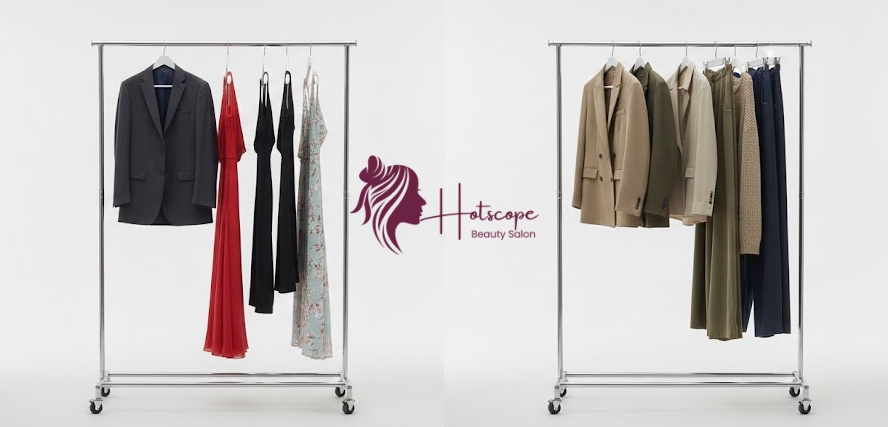
The longevity point matters if you’re spending money. Androgynous pieces – a good blazer, quality trousers, a well-cut coat – work for years because they’re not tied to this season’s feminine or masculine mood. Gendered fashion dates faster because it’s playing to trends that shift constantly.
What’s Trending Right Now
Neo-bourgeois styling is everywhere. Tailored vests over skirts, regardless of who’s wearing them. Post-apocalyptic looks with distressed leather showed up across multiple shows – again, no gender assignment. Comfort-focused knits dominate, all cut loose enough that sizing becomes more about fit preference than body type.
Wales Bonner and COS are pushing hardest into genderless lines. Both brands figured out that designing one great piece is more efficient than designing two mediocre ones split by section.
Where Gendered Fashion Still Works
Formalwear hangs on. Black tie events still expect tuxedos on men and gowns on women. Wedding dress shopping remains heavily gendered. Corporate dress codes in conservative industries enforce the binary, whether employees like it or not.
But even there, cracks show. More men wear heels. More women opt for tailored suits at weddings. The rules exist, they’re just enforced less strictly than they used to be.
Practical Crossover
If you’re curious but not ready to overhaul your wardrobe, start with accessories. A watch that isn’t marketed as masculine or feminine. Jewellery without gendered packaging. Bags that work across the old categories.
From there, it’s silhouettes. An oversized blazer reads the same on anyone. Straight-leg trousers don’t care about your gender. Build from basics that don’t announce themselves one way or the other.
The clothes that work best in 2026 are the ones that fit well and look good. Which sounds obvious, except the fashion industry spent a century telling us fit and good looks meant completely different things depending on whether you checked M or F on a form. That assumption is finally losing its grip.