

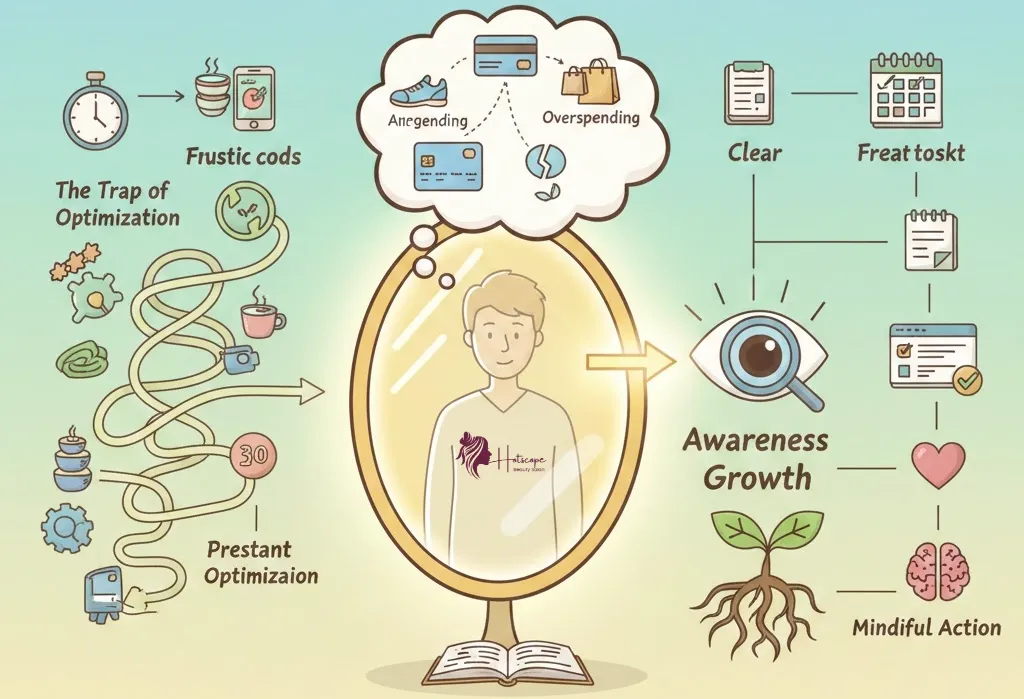
Ever catch yourself repeating a pattern you promised you’d stop—maybe skipping the gym again, overspending at checkout, or zoning out mid-conversation? Most people have. It’s a quiet reminder that change doesn’t begin with motivation or willpower. It begins with noticing. In this blog, we will share why awareness is the root of real personal growth, and how tuning in—not powering through—makes lasting change possible.
The Mirror Most People Avoid
Self-improvement tends to come wrapped in hype. The morning routines. The productivity hacks. The constant calls to “level up.” But in reality, nothing shifts until a person actually pays attention to their patterns. Growth isn’t about stacking more habits onto a busy schedule. It starts with seeing clearly—without defensiveness or denial—where time, energy, and attention are actually going.
Awareness gets framed as something passive, but it’s anything but. It takes work to spot what’s automatic. Noticing the emotional triggers behind bad habits. Catching the quiet beliefs that guide decisions. Recognizing where your time disappears. These aren’t epiphanies. They’re practiced observations that become more revealing the longer you stick with them.
Right now, culture is shifting toward measurable self-awareness. People aren’t just tracking steps or calories anymore. They’re monitoring screen time, checking mental health apps, auditing their spending, scanning biometric feedback. The rise of tools that turn personal behavior into visible data reflects a deeper craving—not for perfection, but for clarity. You can’t change what you pretend not to see. And today’s tools make it harder to ignore the gap between intention and action.
Financial awareness in particular has followed this pattern. It’s one thing to say you want to save money or improve credit. It’s another to know your numbers—specifically, where you stand, what affects it, and what you can adjust. Tools like a free credit score tracker make this simple. Instead of guessing or relying on outdated reports, users get ongoing insight that’s both current and actionable. It removes the mystery and replaces it with visibility. And that visibility, used consistently, becomes the starting point for smarter decisions.
When people can check progress at any time, they’re more likely to stay engaged. Not out of pressure, but out of alignment. There’s less fear around looking, less shame in tracking. And when the emotional clutter gets cleared, growth doesn’t feel like a grind. It feels like direction.
Data Is Only Useful if You Stay Awake to It
You can automate tracking. You can set reminders. But growth requires more than collecting information. It demands interpretation. That’s where awareness deepens. It’s not just “I overspent this month.” It’s “I was exhausted and bought convenience over consistency.” It’s not just “I didn’t work out.” It’s “I scrolled until midnight and had no energy in the morning.”
The numbers are the start, not the answer. They’re invitations to understand yourself better—not opportunities to judge or fix. If someone treats data as proof of failure, they’ll stop looking. But if they treat it as feedback, they get leverage. The difference is subtle, but transformative. Growth happens when awareness turns into insight, not when it turns into criticism.
That insight shows up in small ways: catching patterns before they spiral, pausing long enough to choose a different response, recognizing when burnout is brewing. It’s not about becoming someone new. It’s about seeing more clearly who you already are—and where things go sideways.
This is why awareness isn’t about control. It’s about curiosity. It asks better questions. What did I expect from this moment? What story am I telling myself? What would help next time? And unlike discipline, which can be rigid, awareness adapts. It grows with you. It learns with you. It doesn’t expect perfection. It just expects you to keep noticing.
The Trap of Constant Optimization
There’s a strange irony to self-improvement culture: it often pushes people further away from themselves. The pressure to be better, faster, calmer, richer—all while smiling through it—creates a loop of surface changes with no depth. You can buy planners, try cold plunges, even meditate daily, and still feel disconnected if you never stop to ask what’s actually going on.
Awareness breaks that loop. It interrupts the constant doing and asks whether the doing is aligned with what matters. Without it, people chase someone else’s version of success. They get in shape for the wrong reasons. They save money out of fear. They set goals without knowing why they care.
It’s not that habits and systems don’t matter. They do. But they only stick when built on a foundation of honest self-knowing. Otherwise, they crumble the moment stress hits or motivation fades. Awareness makes growth sustainable because it makes it relevant.
Current culture isn’t helping. Algorithms reward distraction. Social platforms reward image over reality. And in a world flooded with curated lives and advice, being aware of your patterns—your energy, your needs, your limits—is a quiet form of rebellion. It’s the kind of presence that doesn’t perform. It just observes, with attention and grace.
Practicing Awareness in a World That Profits From Your Distraction
The truth is, the modern world isn’t built for awareness. It’s built for reaction. Notifications, breaking news, rapid opinions, sales timers—they all nudge people out of themselves and into someone else’s agenda. And over time, that noise crowds out the quiet signals you’re supposed to pay attention to.
That’s why building awareness is a practice. It takes intention. It means leaving space to check in—not just at the end of the year or after a breakdown, but regularly. Daily. With no agenda other than seeing clearly.
The tools help, but they don’t do the work. Journaling, silence, reflection—all of them create conditions for awareness to grow. Noticing what drained your energy this week. Recognizing what actually made you feel calm. Looking at your spending not just to budget better, but to understand what emotions drove your purchases. That’s how change roots deeply.
Slowing Down Isn’t Falling Behind
In a society obsessed with speed, slowing down feels dangerous. Like you’ll miss something. Like you’ll get overtaken. But slowing down to notice isn’t about falling behind. It’s about choosing your direction before you sprint. It’s about realizing that effort without awareness leads to loops. You work hard but stay stuck.
Awareness is what breaks the loop. It shows you what’s actually working and what’s not. It reminds you that some goals aren’t yours to begin with. That some progress comes from rest. That tracking something doesn’t mean obsessing over it—it means staying connected to it.
And connection, ultimately, is what personal growth is really about. Not becoming someone else. But coming home to yourself. With more clarity. With more trust. With more presence.
The world will keep shouting. Trends will keep shifting. But awareness will always cut through. It won’t hand you answers. It’ll give you the eyes to find them yourself. And in that, there’s more power than any shortcut can offer.
One thought on “Why Personal Growth Starts with Awareness”