

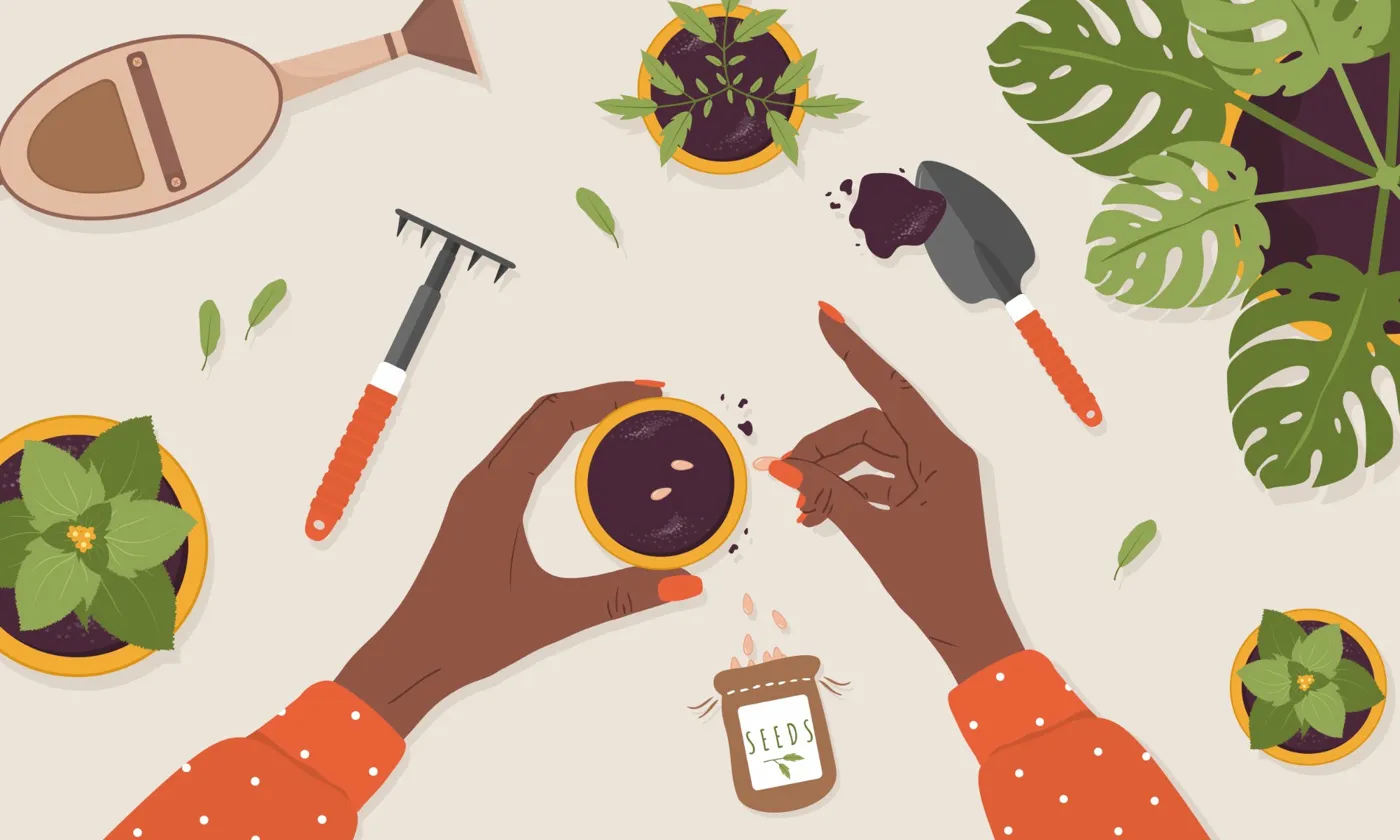
Gardening does something good for your head. The rhythm of it digging, planting, watering, watching stuff grow is genuinely calming in a way that scrolling through your phone pretending to relax never will be. But your skin pays a price for those hours outside if you’re not thinking about protection, and most gardeners aren’t. They’re thinking about whether the tomatoes need staking.
The American Academy of Dermatology has specific guidance for gardeners because the activity combines several skin threats at once: sustained UV exposure, direct contact with plant sap and soil, insect exposure, and chemical products like fertilisers and pesticides. Sunburn is the obvious one. The stuff people miss sap reactions, soil bacteria in small cuts, hands dried raw from hours of digging those add up quietly over a season.
Five things to get right before you head out.
1. Put Sunscreen On First
Not after you’ve been outside for twenty minutes. Not when you notice your shoulders getting pink. Before you walk out the door.
UVA makes up about 95% of the ultraviolet radiation that reaches the earth’s surface, and it goes deep20 to 30% of UVA penetrates all the way into the dermis, according to a review in the Indian Journal of Dermatology, Venereology and Leprology. That’s the layer where your collagen and elastin live. UVB is what gives you the visible sunburn, and 70% of it gets absorbed by the outermost skin layer. But both types cause cumulative damage, and gardening puts you in sustained exposure for hours at a stretch.
| UV Type | How Much Reaches Earth | How Deep It Goes | What It Does |
|---|---|---|---|
| UVA | ~95% | Into the dermis (20-30%) | Aging, wrinkles, age spots |
| UVB | ~5% | Mostly stopped at outer layer (70%) | Sunburn, DNA damage, cancer risk |
Broad-spectrum SPF 30 or higher. Every exposed area face, ears, back of neck, hands, any skin showing between your sleeves and gloves. Reapply after two hours. Water-resistant versions hold up better because you will sweat. And if you can avoid the 10 AM to 2 PM window entirely, that’s ideal.
A wide-brimmed hat beats a baseball cap by a wide margin here. Baseball caps leave your ears and the back of your neck completely exposed, and those are two spots where gardeners accumulate UV damage without realising it because they can’t see those areas reddening while they work.
2. Wear Gloves (And the Right Ones)
Your hands do all the work in a garden and they take all the punishment. Thorns, gritty soil, rough stems, chemical residue from products everything concentrates on your fingers and palms. The AAD recommends gardening gloves not just for injury prevention but specifically to avoid contact dermatitis from plant sap.
Most people know roses have thorns. Fewer people know that parsley, celery, and carrots contain compounds called furocoumarins that react with sunlight on your skin. Cleveland Clinic calls the resulting condition phytophotodermatitis basically a chemical burn where plant oil plus UVA light creates blisters, inflammation, and dark patches that can stick around for months. Pyracantha, commonly called firethorn, earned its name honestly. Stinging nettle injects histamine directly through tiny hair-like needles on contact.
Fabric-lined gardening gloves handle most planting and pruning. For chemical work fertilisers, pesticides, herbicides switch to nitrile gloves. Dr. Lucia McGevna, a dermatologist featured by the National Eczema Association, also flags an issue most people would never think of: screen-printed designs on gloves can contain formaldehyde-based dyes that irritate sensitive skin. Plain gloves, boring as they look, are the safer option.
Quick breakdown by task:
- Weeding, pruning, planting: Thick fabric gloves with snug cuffs keep sap and thorns off skin
- Fertiliser and pesticide handling: Nitrile with fabric liners for chemical protection without trapping sweat
- Watering and lighter jobs: Waterproof gloves prevent prolonged wet contact that strips oils from hands
One more thing that’s easy to forget in the middle of a task: don’t touch your face with garden hands. Sap transfers from fingers to facial skin faster than you’d expect, and your face reacts more aggressively to irritants than your hands do.
3. Clothing Protects More Than Sunscreen Alone
Shorts and a t-shirt feel right on a warm afternoon. From a skin perspective, they’re a bad call for extended garden sessions. Long sleeves and trousers create a physical barrier against UV, plant contact, and insect access all at once. UPF-rated fabrics designed for outdoor activity are lightweight enough that you won’t overheat, and they block UV far more reliably than sunscreen alone since you can’t sweat them off or forget to reapply them.
Gardening postures expose skin in places you wouldn’t expect. Kneeling? The backs of your calves face the sun for extended periods. Reaching up into a tree or tall shrub? Your lower back and stomach get exposed where your shirt rides up. Bending forward for an hour of weeding? The back of your neck gets hammered with direct UV the entire time. Clothing solves all of these without you having to think about it.
Covered skin also means fewer tick and mosquito bites. The AAD recommends a full body check for ticks after gardening hairline, underarms, between toes because tick-borne illness is a real concern during garden season. Long clothing doesn’t eliminate the risk but cuts it down considerably.
For the lawn mowing portion of yard work, which can easily add another hour of sun exposure on top of your gardening time, a robotic lawn mower handles the job while you stay inside. It’s an investment in convenience, sure, but from a skincare standpoint it’s also eliminating one of the longest sustained UV exposure windows in your weekly routine.
4. How You Wash After Gardening Matters
Running your hands under the kitchen tap for ten seconds and calling it done? That’s not enough. Plant sap, pollen, soil microbes, pesticide traces, and fertiliser residue all sit on your skin after a garden session. They keep causing irritation until they’re actually removed. The AAD recommends a full shower and a change of clothes after gardening to get plant residue off your skin.
The timing matters for one specific reason. Phytophotodermatitis that burn reaction from plant chemicals plus UV can be reduced or prevented entirely if you wash the plant compounds off your skin within an hour or two of contact. Leave them on longer than that and the UV has already done its work on those compounds. Warm water and regular soap is all you need. Speed matters more than product choice here.
Hands need gentler treatment than you’d think. Garden work already strips your skin’s natural oils through soil contact, repeated water exposure, and physical friction. Harsh soap on top of that pushes already-stressed skin toward cracking and irritation. A mild, pH-neutral cleanser does the job without making things worse. Moisturise while your hands are still slightly damp afterward it traps the water against your skin and helps rebuild the barrier.
Post-garden checklist worth making habitual:
- Shower, change clothes: gets sap, pollen, and chemical traces off skin and out of fabric
- Clean any cuts or scrapes with antiseptic: soil bacteria infect minor wounds from thorns more often than you’d think
- Gentle cleanser on hands: not dish soap, not antibacterial hand wash, something pH-neutral
- Moisturise on damp skin: replenishes what hours of sun, wind, and dirt pulled out
- Tick and bite check: behind ears, hairline, underarms, between toes, behind knees
5. Garden Chemical Labels Exist for a Reason
Insecticides, herbicides, fertilisers, fungicides. They’re formulated to kill or suppress living organisms. Your skin is a living organ. The largest one you have, actually. And plenty of gardeners pour, spray, and spread these products bare-handed because the bag doesn’t look particularly dangerous sitting there on the garden centre shelf.
The AAD is direct about this: garden chemicals cause reactions from mild rashes up to severe chemical burns, and the prevention is straightforward read the label and follow it. Some products specify glove use. Some require immediate skin washing if contact happens. Some have drying times where the treated soil or plant shouldn’t be touched. All of it is printed right there on the packaging.
Dr. McGevna calls fertilisers and pesticides “notable enemies” for anyone with eczema or sensitive skin and recommends handling them with care followed by washing with gentle, unscented soap. But you don’t need a pre-existing skin condition to get a reaction. Concentrated chemical fertiliser on bare wet skin for a couple of hours is enough to irritate anyone.
Treat your garden chemicals the way you treat cleaning products under the kitchen sink. Gloves on, skin covered during application, wash up after. And if you’ve decanted anything into an unlabelled container at some point figure out what it is or get rid of it. Grabbing the wrong bottle with wet bare hands is how accidents happen.
None of this is complicated once it becomes routine. Sunscreen, gloves, covered skin, a proper wash afterward, and attention to chemical labels. Five habits that take a few minutes total and protect against damage you’d spend years and money trying to reverse or in the case of accumulated UV exposure and skin cancer risk, damage you can’t undo at all.